Description:
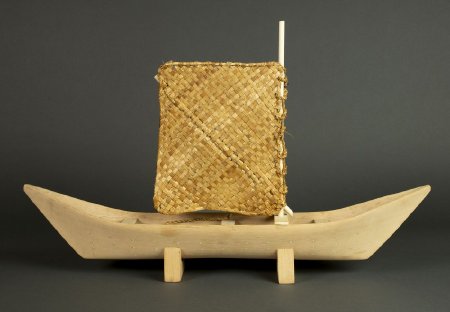
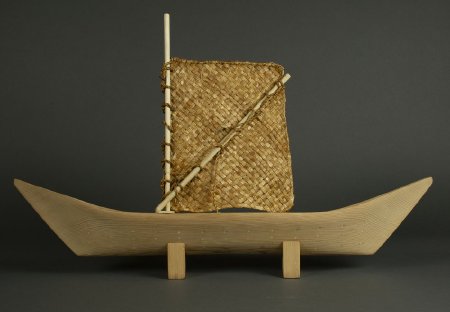
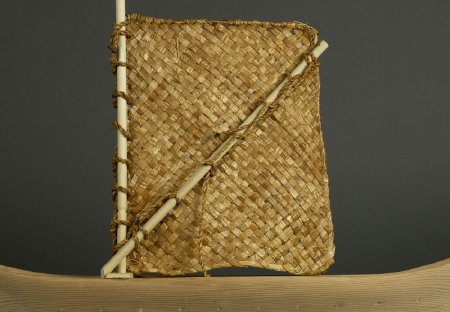
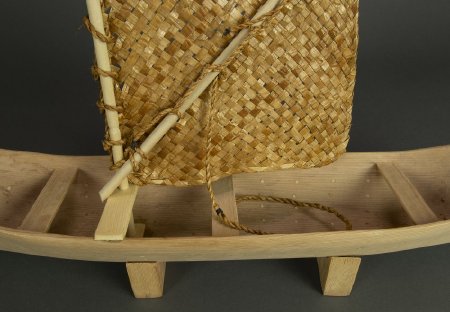
Model Canoe and Cedar Bark Sail, 2025
Mitchell A. Denny
Tlingit, Sanyaa K̲wáan, Raven, Beaver
Tlingit, Sanyaa K̲wáan, Raven, Beaver
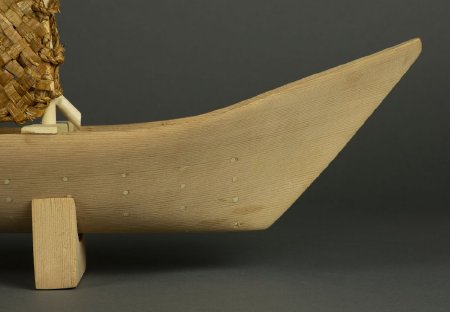
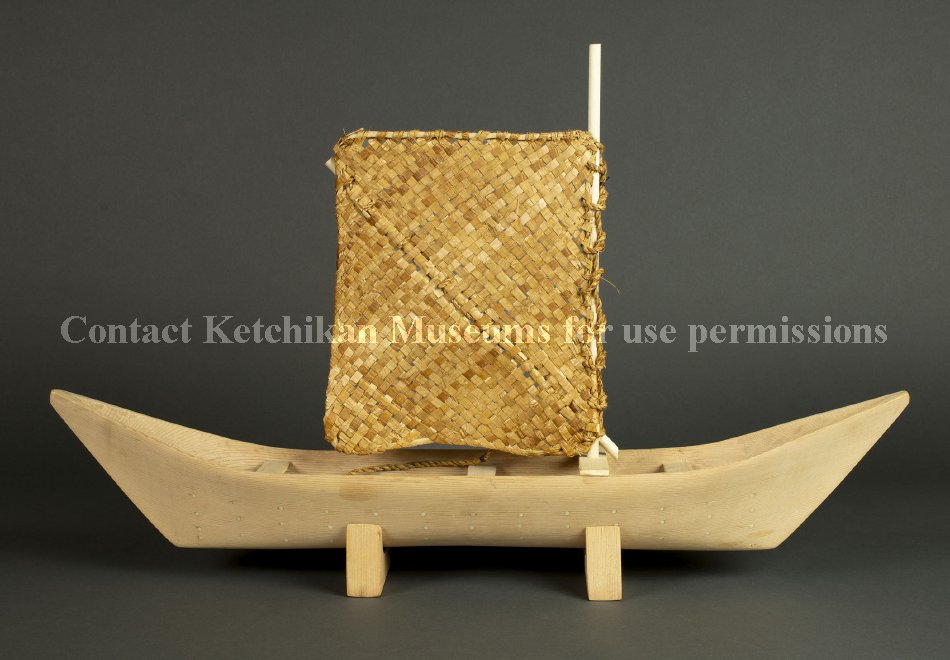
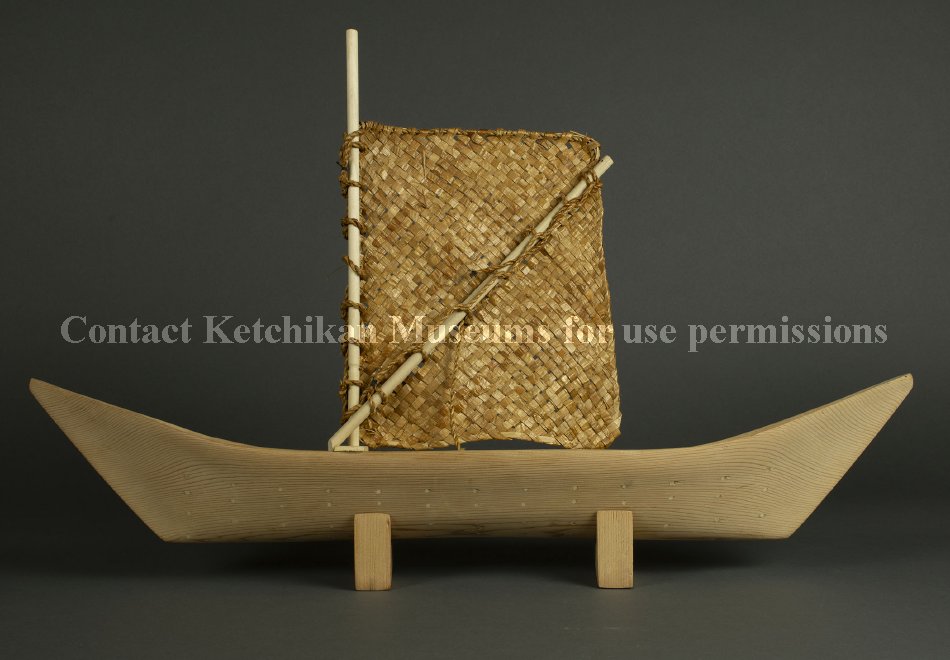
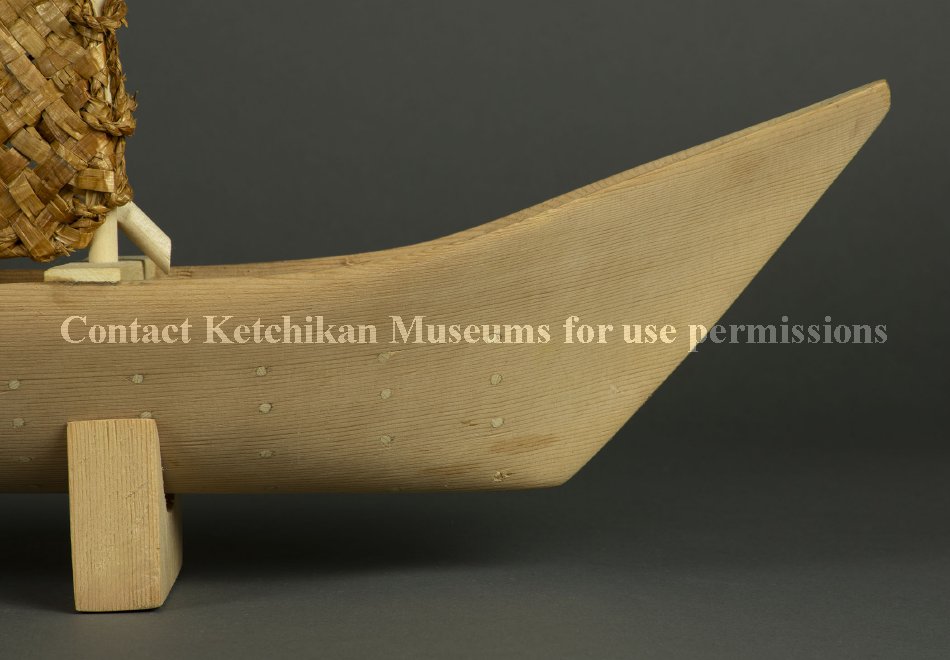
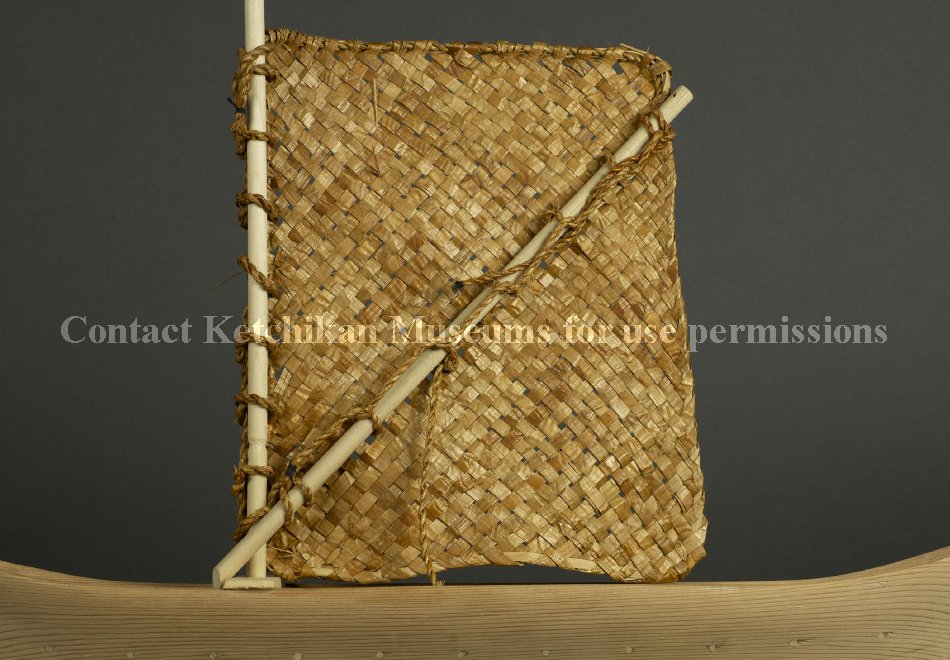
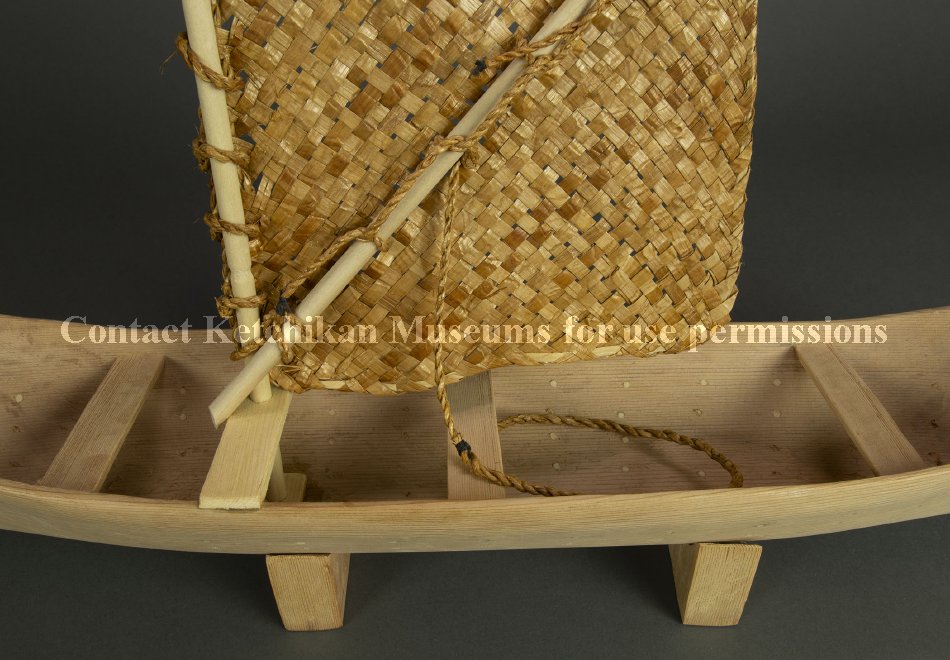
This model canoe is carved from a single piece of red cedar. It was created during the Model Canoe Carving class taught by Naal xak'w, Tommy Joseph, in 2025. Model canoes are an important part of learning to carve full-sized dugout canoes, allowing students to practice the same techniques and build the necessary skills on a smaller scale.
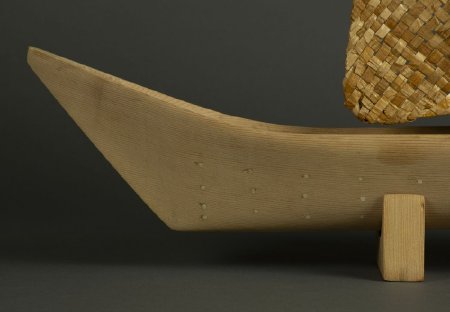
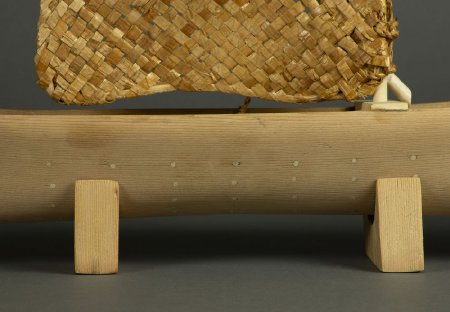
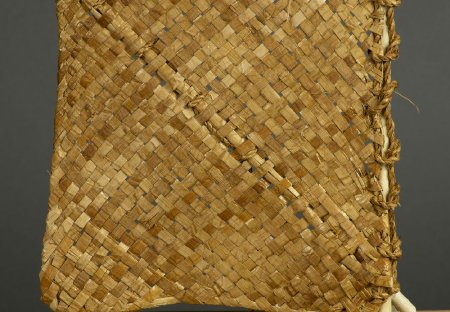
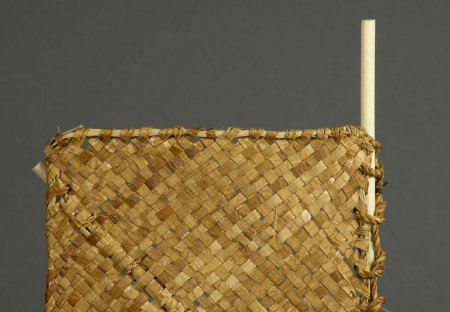
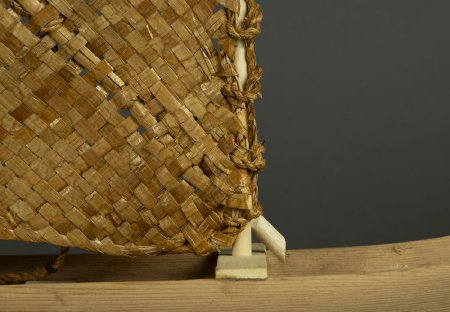
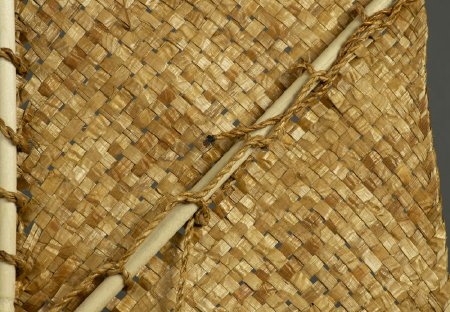
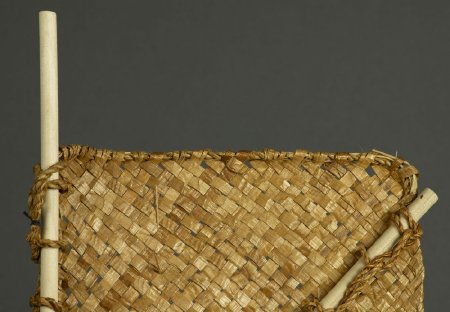
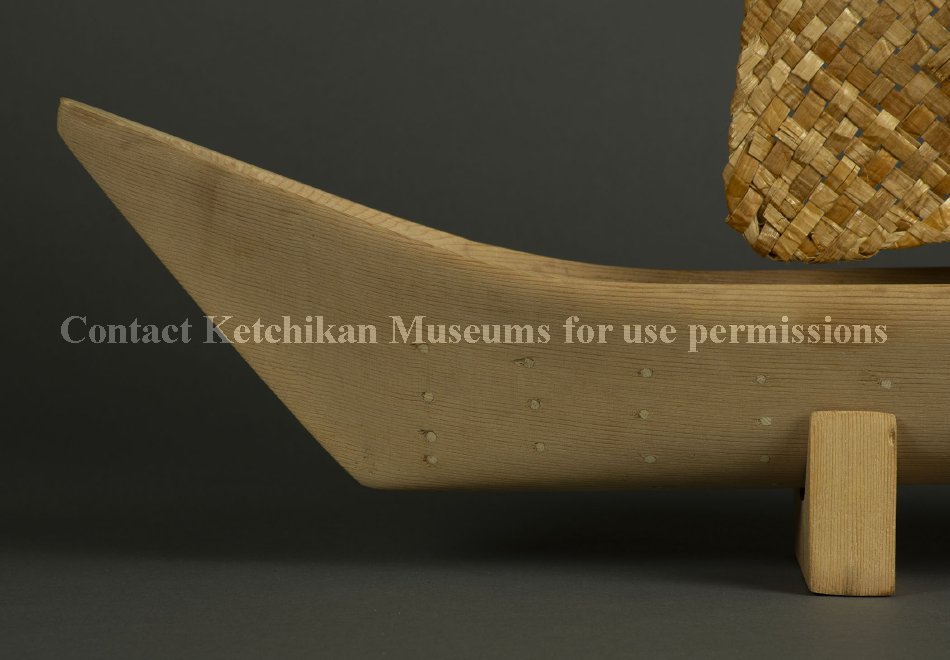
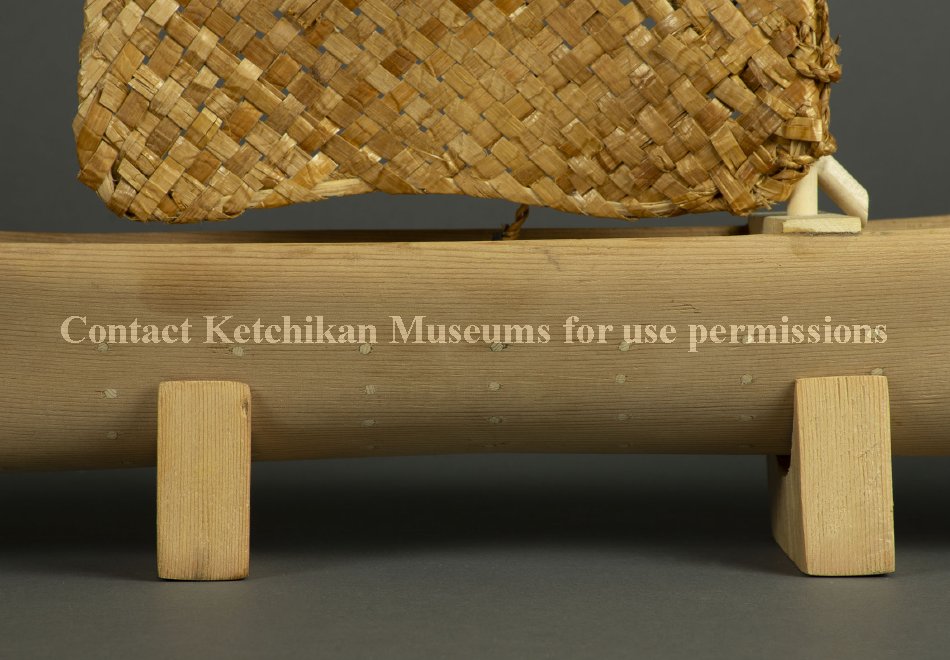
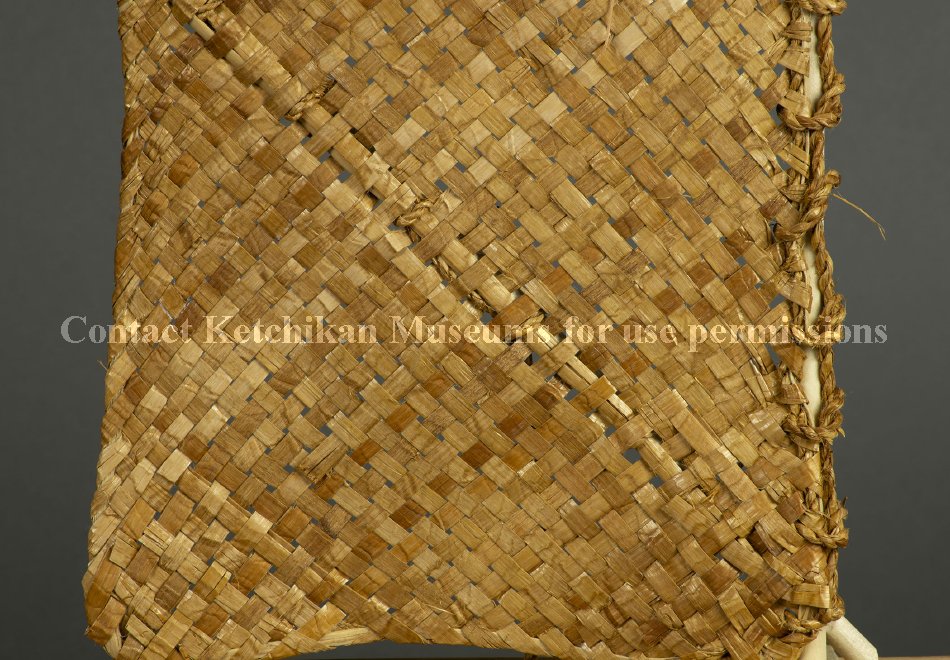
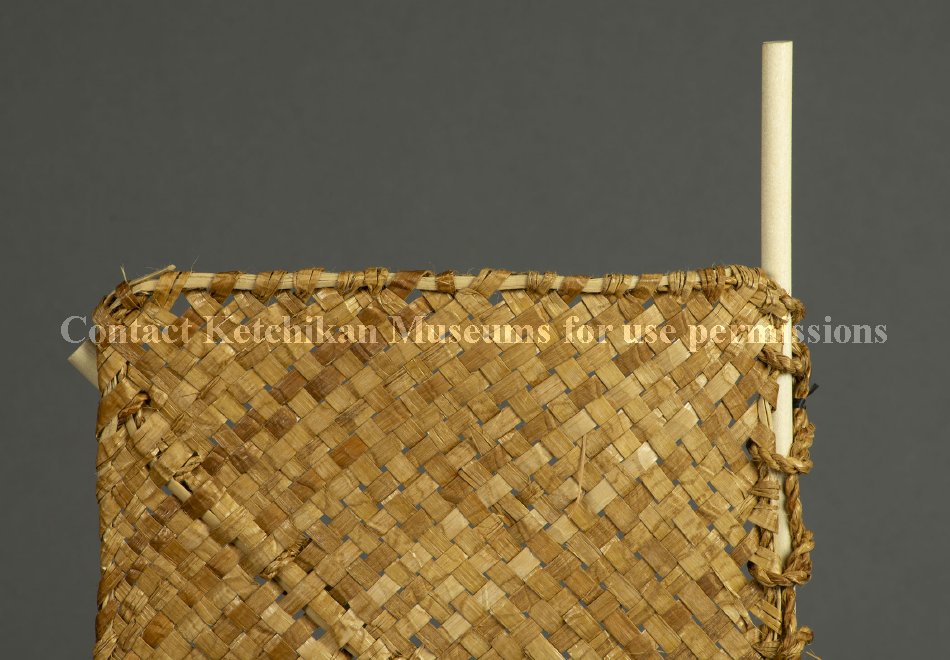
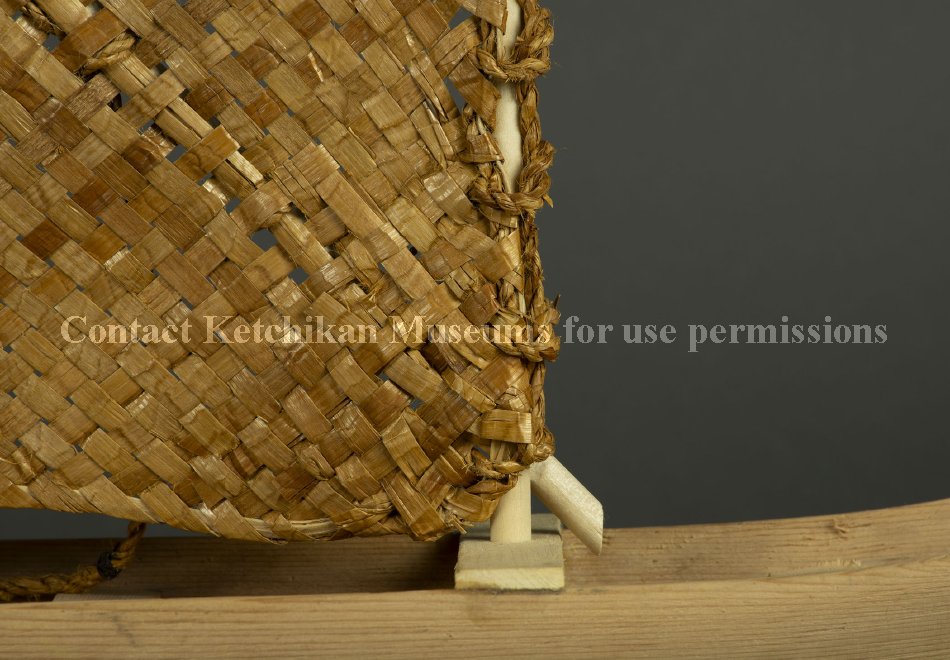
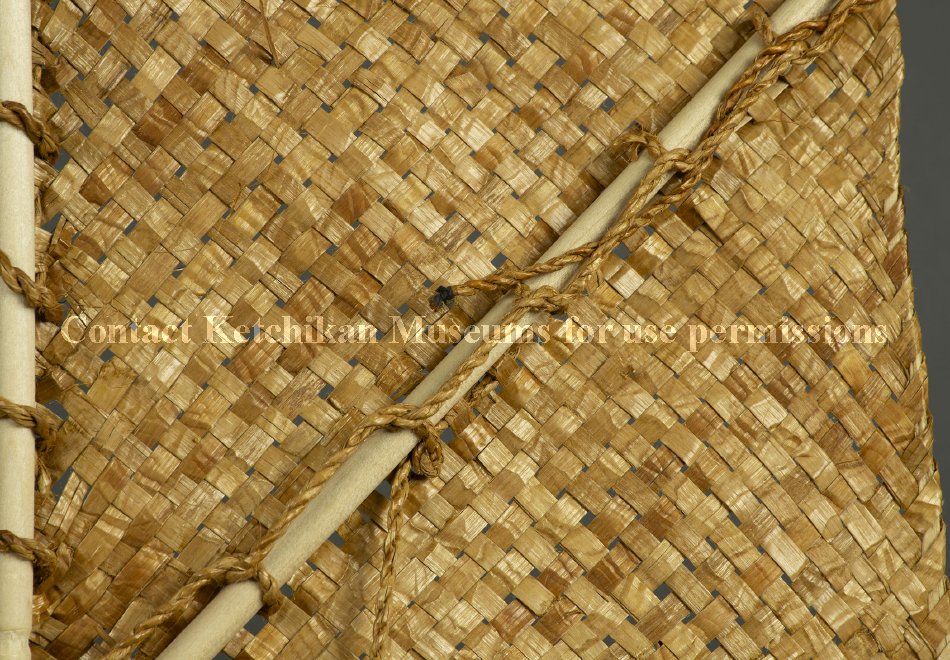
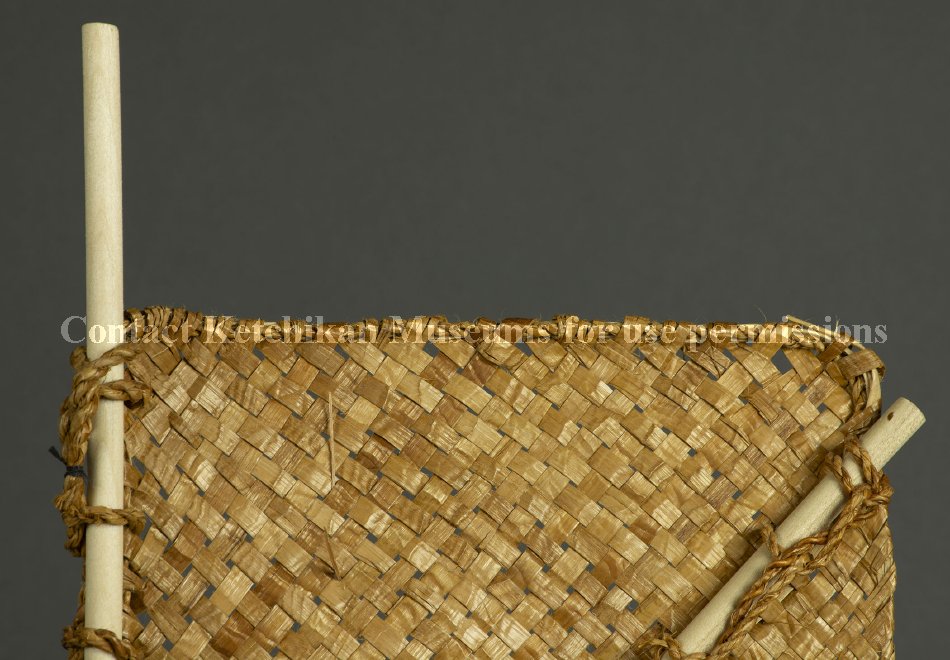
After shaping the exterior, students hollowed out the inside of their canoes. They began by drilling holes and inserting contrasting yellow cedar plugs as depth gauges. Reaching a plug during carving indicated the desired thickness in that area. Students then steamed and bent their canoes using boiling water and spreaders to achieve and maintain the proper width and outward flare. To complete their model canoes, students created red cedar bark sails during the Intermediate/Advanced Level Cedar Sail Weaving for Model Canoe class taught by Holly Churchill in 2025.
After shaping the exterior, students hollowed out the inside of their canoes. They began by drilling holes and inserting contrasting yellow cedar plugs as depth gauges. Reaching a plug during carving indicated the desired thickness in that area. Students then steamed and bent their canoes using boiling water and spreaders to achieve and maintain the proper width and outward flare. To complete their model canoes, students created red cedar bark sails during the Intermediate/Advanced Level Cedar Sail Weaving for Model Canoe class taught by Holly Churchill in 2025.
"I grew up in Kasaan and spent most of my life on the water. I've always been interested in boats. My culture is important to me. I'm a carver and have made canoes, masks, bowls, drums, and spoons. This is my third canoe but my first time doing it traditionally.
I want to carve a full-size canoe, and I wanted to learn how to do it traditionally. This was a good way to learn. There's a lot more to it than you might think. It was more technical than I thought"- Mitchell A. Denny
Loaned by Mitchell A. Denny
L2025.4.6.1 A-C
L2025.4.6.1 A-C
Click to Enlarge